From Paper Stacks to a Real-Time Fleet: a Haulage Firm Goes Digital
A driver app, an admin portal and a digital departure check for a mid-sized haulage company — multilingual, GDPR-compliant and in production. A case study with no names, but plenty of substance.
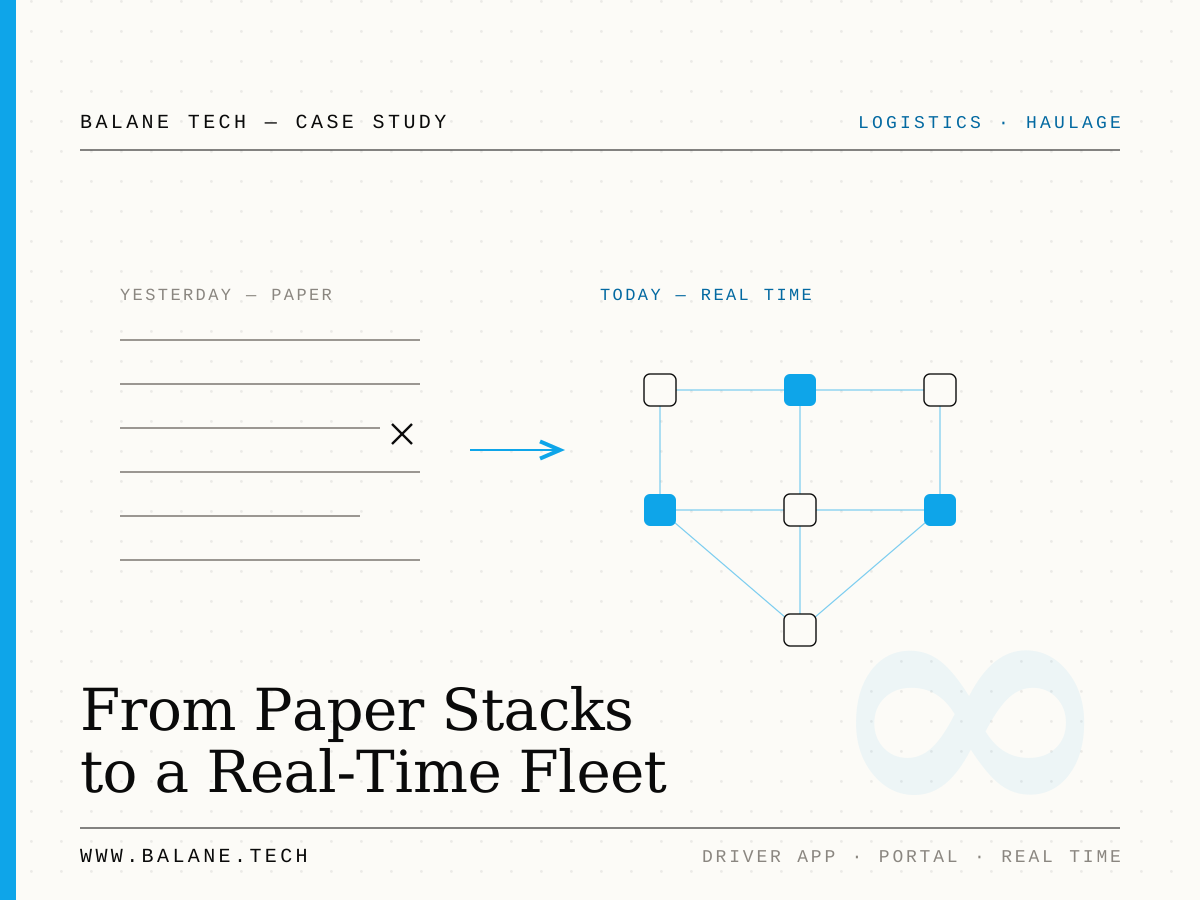
From Paper Stacks to a Real-Time Fleet: a Haulage Firm Goes Digital
Some projects are interesting precisely because they are unspectacular. No hype, no buzzwords — just a business that has to run every single day, and software that stays out of its way. That is the kind of project we are describing here: the digitalization of the daily operations of a mid-sized haulage company. No company name, no internal details — but a clear picture of what was actually built and why it holds up in practice.
The starting point will be familiar to many logistics operators: departure checks on paper that eventually disappear into a binder. A workforce that speaks several languages, while instructions only arrive in German. And a dispatch desk that only learns in the evening that something was already wrong with a vehicle that morning. None of this is a disaster — but together it costs time, patience, and sometimes the traceability that matters when something goes wrong.
What We Built
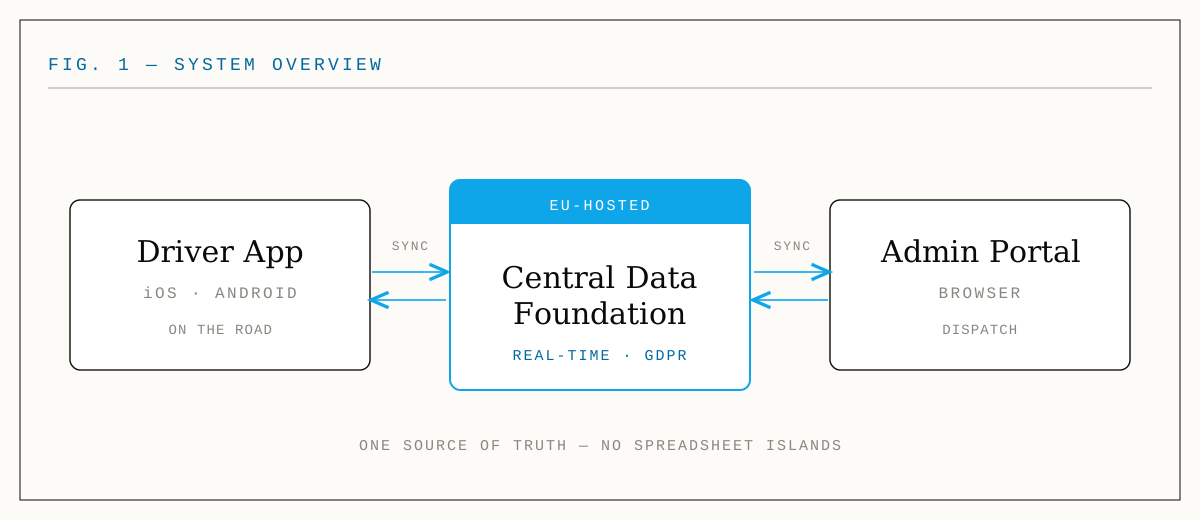
Three building blocks, one shared data foundation:
- Native driver apps for iOS and Android — the tool for the road: vehicle, tasks, handbook, messages, damage reporting.
- A browser-based admin portal — for dispatch and administration: vehicles, drivers, appointments, damages, documents, all in one place.
- A central, EU-hosted data foundation — both sides see the same state in real time, without isolated tools and spreadsheet islands.
The goal was never "as many features as possible," but "the right ones, for the people who actually use them." A driver in the yard has different needs than a dispatcher at a desk — and the software reflects that.
A Departure Check That Doesn't Vanish Into a Binder
The centerpiece. The driver works through the inspection points on the vehicle and ticks them off. If something is wrong, they set the point to "defect," add a short note — and take a photo right away.
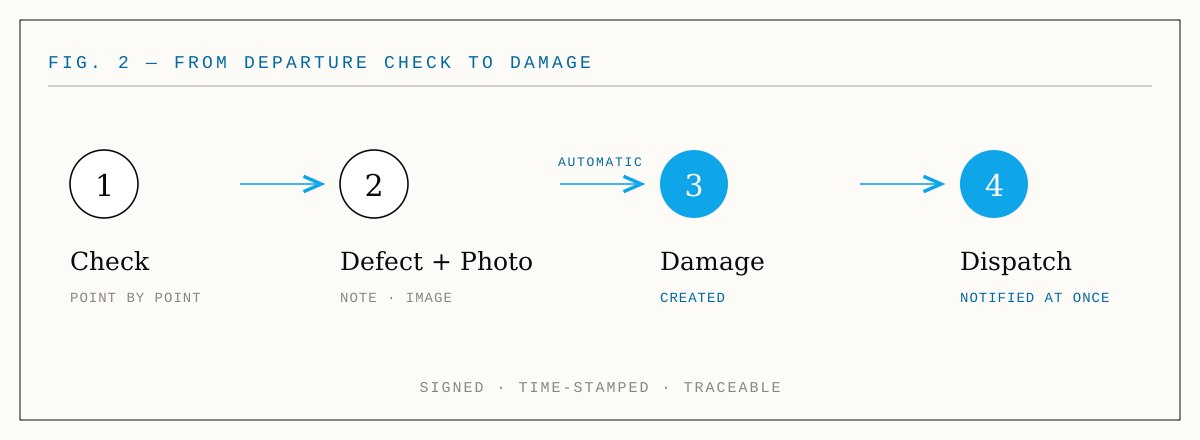
This is where the difference is made: every reported defect automatically becomes a damage case — with the vehicle, the note and the image attached. Dispatch is notified immediately, instead of stumbling on it later. The record is signed, time-stamped and traceable at any point.
A sheet of paper that nobody reads becomes a process that moves itself to the right place.
17 Languages — and Messages That Arrive Translated
In many haulage firms the workforce is international. An app that only speaks German reaches only half of them. So the driver app runs in 17 languages, including the text direction for languages such as Arabic.
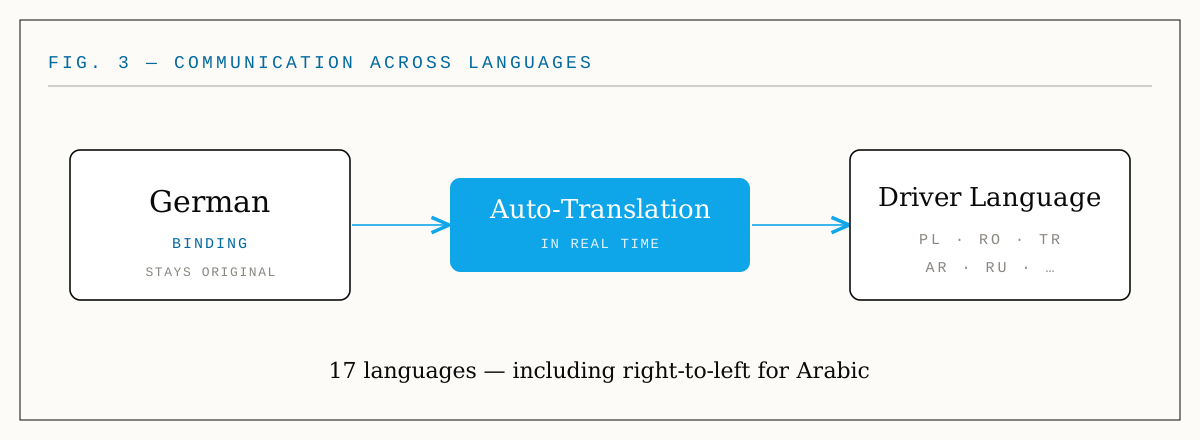
On top of that, chat messages are translated automatically: dispatch writes in German, the driver reads in their own language — and the German version stays visible as the binding original. No misunderstandings, and nobody has to guess what was meant.
The In-Vehicle Tablet — No Account, No Login
A tablet fixed in the truck that any driver can use without remembering a password. You enter the vehicle number once — it stays saved — and sign in with a short PIN. From there the full driver app is available, in sync with your own phone.
The driver stays signed in until they sign out or someone else takes over the vehicle; once a week they re-confirm. No account juggling, no forgotten credentials — and still a clean record of who is on which vehicle right now.
Damages, Workshops, Deadlines, Documents
What starts as a defect or a report continues through an end-to-end process: a damage can be assigned to a workshop, deadlines and appointments are managed centrally, documents live where drivers and administration need them. None of it is spectacular — and that is exactly the point. It takes friction out of the day.
What Changed
We deliberately avoid made-up percentages here. What can be observed is concrete enough:
- Defects are seen when they happen — not whenever someone happens to open a binder.
- Dispatch has a real-time picture of the fleet, instead of assembling it in the evening.
- Drivers are reached in their own language — instructions land, not just get sent.
- Less paper, more traceability — checks are signed, dated and findable.
Why It Holds
You can tell good operational software not by how much it is talked about, but by the fact that it works and nobody thinks about it anymore. Three things mattered to us:
- Built for the people who use it. The driver in the yard and the dispatcher at the desk live in different realities — each interface follows its own.
- EU-hosted, GDPR-compliant. Data about drivers and vehicles belongs in a clear legal framework, not a grey area.
- In production, not in pilot mode. The system grew in real operation, with real vehicles and real feedback — and keeps growing.
It is not a lighthouse project with a press conference. It is a business that now runs its day a little more calmly, clearly and traceably than before. For us, that is exactly the measure that counts.


