Custom Odoo Module Development – From Concept to Production-Ready Module
Why standard Odoo often falls short and how professional module development adapts your ERP precisely to your business processes – from requirements analysis to integration.
Custom Odoo Module Development – From Concept to Production-Ready Module
Odoo is one of the most flexible ERP systems on the market. With over 40 official apps and thousands of community modules, it covers a large portion of business processes. But here lies the challenge: "A large portion" is not "all."
Every company has processes that cannot be mapped in standard software. That's exactly what custom Odoo modules are for.
Why Standard Odoo Often Falls Short
Odoo offers strong standard features for CRM, accounting, inventory management, and more. But in practice, companies regularly hit limitations:
Industry-Specific Requirements
Every industry has its own workflows. A manufacturing company needs different approval processes than a marketing agency. Standard modules are intentionally generic – that's both a strength and a weakness.
Internal Processes
Established company processes can rarely be mapped 1:1 in standard software. Instead of adapting the process to the software, it's often more sensible to adapt the software to the process.
Missing Integrations
Existing systems – from proprietary industry software to internal tools – often need to be connected. Standard connectors don't exist for every system.
Reporting & Dashboards
Standard reports cover the most common cases. Individual KPIs, industry-specific analyses, or complex data correlations require custom solutions.
Our Development Process for Odoo Modules
We develop Odoo modules following a structured process that ensures the result matches your requirements precisely.
1. Requirements Analysis
Before a single line of code is written, we understand your process:
- As-is analysis: How does the process currently work?
- Target concept: How should it be mapped in Odoo?
- Gap analysis: What can standard Odoo do, what's missing?
- Scope definition: What belongs in the module, what gets solved differently?
2. Technical Concept
Based on requirements, the technical design emerges:
- Data model: Which models, fields, and relations are needed?
- Business logic: Which automations, validations, and workflows?
- UI/UX: What does the user interface look like? Views, menus, wizards?
- Interfaces: Which integrations to other Odoo modules or external systems?
3. Iterative Development
We develop in sprints with regular demos:
- Working intermediate versions for testing
- Early feedback instead of surprises at the end
- Adjustments possible during development
4. Testing & Quality Assurance
Every module undergoes comprehensive testing:
- Unit tests: Automated tests of business logic
- Integration tests: Interaction with other Odoo modules
- Usability tests: User-friendliness verification
- Performance tests: Behavior with realistic data volumes
5. Deployment & Integration
Integration into your existing Odoo environment:
- Installation and configuration
- Data migration if needed
- Training your employees
- Documentation
Technical Expertise
Odoo module development requires specific know-how that goes beyond general web development.
Python & Odoo Framework
The backend of an Odoo module is based on Python and the Odoo ORM:
- Models: Definition of business objects with fields, constraints, and computed fields
- Business logic: Python methods for validation, automation, and workflows
- Security: Access rights, record rules, and groups
- API: Controllers for external integrations
OWL (Odoo Web Library)
Odoo's modern frontend framework for interactive user interfaces:
- Reactive components
- Custom widgets
- Dashboard elements
- Client-side validation
PostgreSQL
The database layer is crucial for performance:
- Optimized queries
- Indexing
- Data integrity
- Migration of existing data
XML Views & QWeb
The presentation layer in Odoo:
- Form views, tree views, kanban views
- Search filters and groupings
- QWeb reports for print output
- Email templates
Standard Modules in the Odoo App Store
In addition to custom development, we publish our own standard modules in the Odoo App Store. These modules solve commonly occurring problems that standard Odoo doesn't cover.
Our first module is already in the Store:
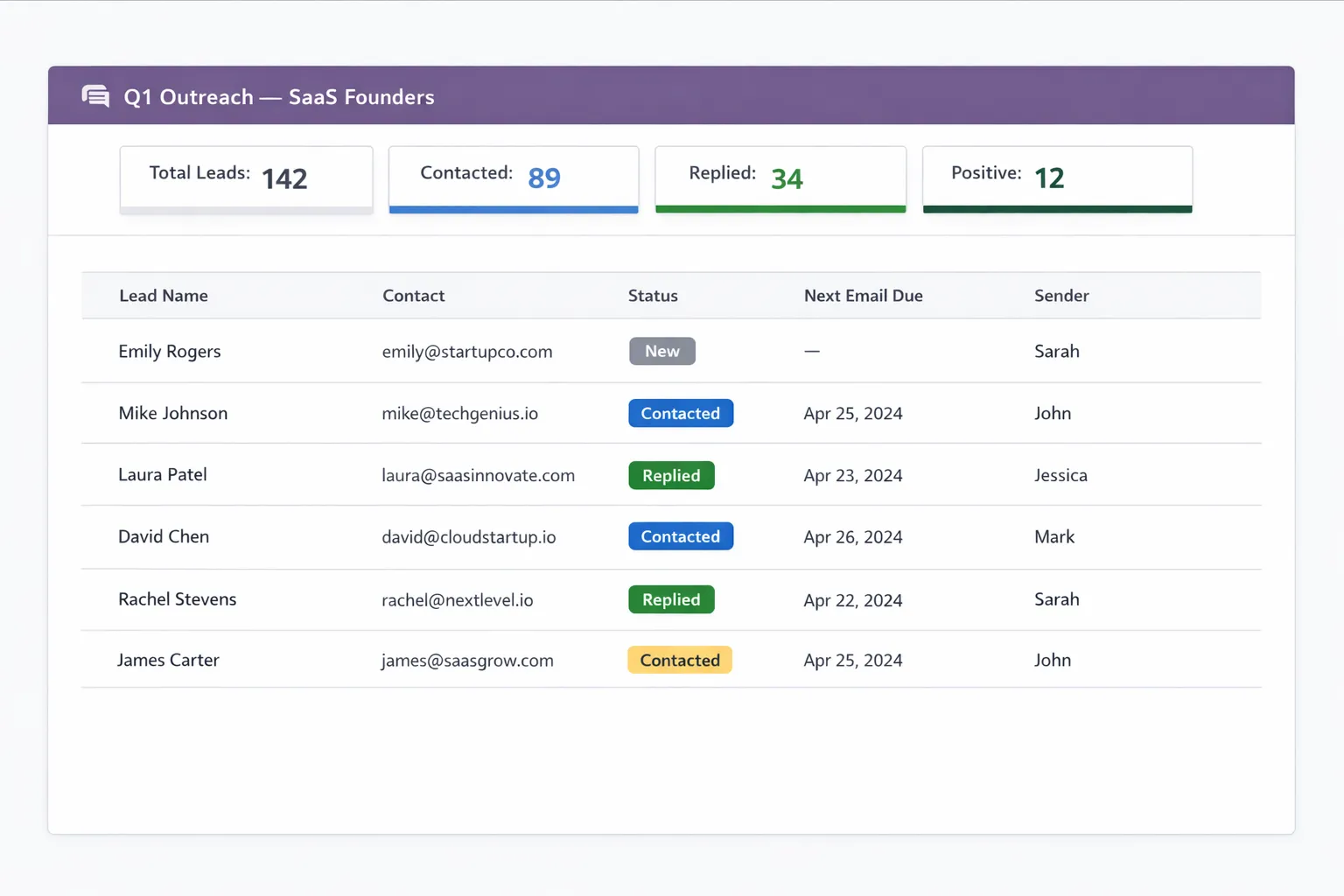
- CRM Outreach Campaigns ($499) – Email sequences, campaign tracking, multi-sender support, GDPR compliance
- CRM Direct Email (Free) – Solves the follower problem in the CRM email composer
Both modules are built on Odoo 18 – versions for Odoo 17 and 19 coming soon. Read more in our article.
Who Benefits from Custom Odoo Development?
Companies with Specific Processes
If your core process isn't covered by standard modules, custom development is the right path.
Growing Companies
If you already use Odoo and are reaching the limits of standard functionality.
Companies Before ERP Implementation
If you're implementing Odoo and want to ensure from the start that it fits your processes.
Conclusion
Odoo is a powerful ERP system – but it only reaches its full potential through custom modules tailored precisely to your business processes. Professional module development means not just "writing code," but understanding processes, designing cleanly, testing thoroughly, and integrating seamlessly.
Whether you need a single module for a specific process or want to extend your entire Odoo environment – we bring the technical expertise and process understanding.
